

When your vehicle is stuck in a challenging situation, whether in a ditch or out in the mud, a tow service offering winching and recovery services could be your best solution. Towing is more than just hauling a vehicle from point A to point B. It’s about safely recovering your car or truck when it’s in a location or condition that makes traditional towing impractical or impossible. In this article, we’ll dive into the different types of recovery services, the process of winching, and when they are necessary.
Different Types of Towing Recovery Services
When a vehicle becomes immobilized, standard towing services might not be sufficient. Depending on the situation, towing companies offer a range of recovery services to get your vehicle back on track. Here are the most common types of recovery services and when they’re used:
1. Flatbed Towing
Flatbed towing is often the preferred method when a vehicle is severely damaged or cannot be safely driven. The vehicle is loaded in a flatbed truck, making it the safest option for long-distance towing or for vehicles with low ground clearance.
Example: If a car has been in an accident and cannot drive, flatbed towing ensures it is transported without further damage.
“Flatbed towing is ideal for cars that can’t be driven due to damage or those that are valuable or delicate,” says Mark Davis, a professional tow truck operator with over 15 years of experience.
2. Wheel-Lift Towing
This involves lifting of the vehicle by its wheels,with the use of a hydraulic arm. This method is common and efficient for vehicles that can still be driven a short distance, such as when a car needs to be taken to a repair shop.
Example: A car with a flat tire can be lifted using a wheel-lift tow to a nearby service station for repairs.
3. Winching
Winching is a recovery service that involves pulling a vehicle from a tough spot using a winch attached to a tow truck. This method is crucial when a vehicle is stuck in mud, snow, or a ditch.
Example: If your car is stuck in a muddy field, a tow truck can pull it out using its winch. The winch uses a strong cable to gradually pull the car back onto solid ground.
4. Rollback Towing
A rollback tow truck has a flat surface that can tilt backward, allowing a vehicle to “roll” onto the bed. This method is useful for low-clearance vehicles or when a vehicle needs to be loaded and unloaded carefully.
Example: Classic cars or vehicles with low ground clearance benefit from rollback towing because it avoids scraping the undercarriage.
5. Heavy-Duty Recovery
Heavy-duty recovery services are required when the vehicle is large, such as a commercial truck, RV, or bus. These services use specialized tow trucks designed for bigger, more complex recovery jobs.
Example: If a semi-truck breaks down on the highway, heavy-duty recovery equipment will be needed to remove it from the road safely.
What is Winching
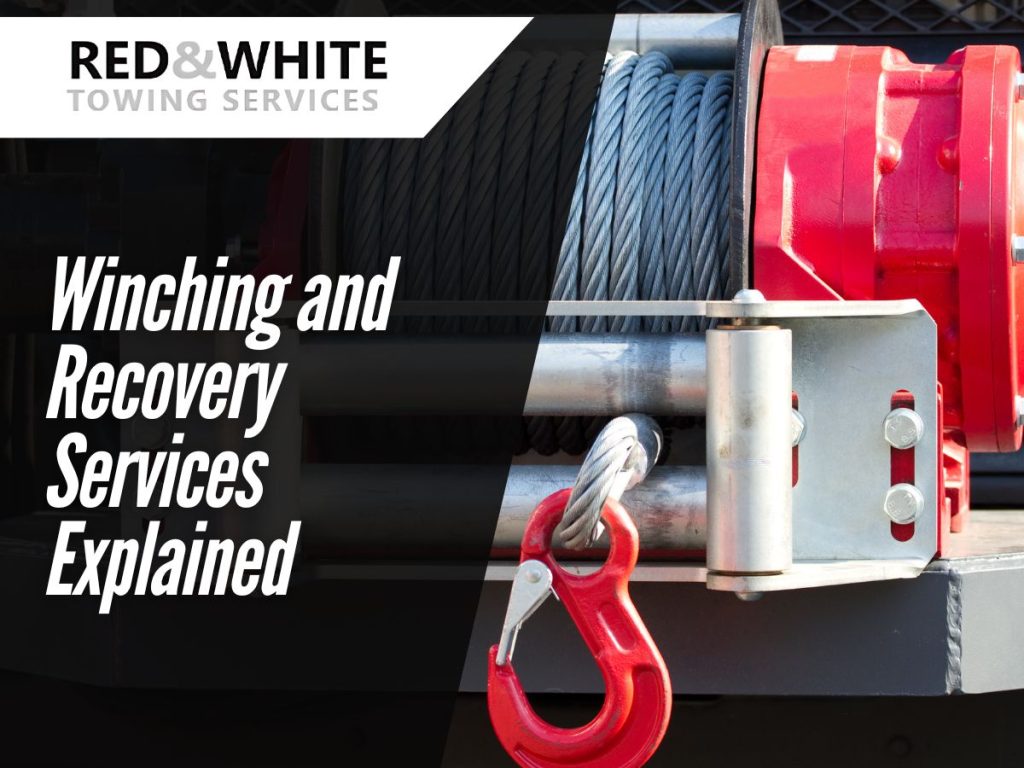
Winching is a specific form of recovery service that involves using a winch (a large spool of strong cable or rope) to pull a vehicle out of difficult terrain. The winch is typically mounted on a tow truck or a specialized recovery vehicle. This service is essential when a vehicle is stuck in mud, snow, a ditch, or other challenging conditions where typical towing methods won’t suffice.
The Winching Process
- Assessment of the Situation: The first step is evaluating the location of the stuck vehicle. A towing professional will check the terrain, vehicle condition, and safety concerns.
- Attaching the Winch: The tow operator will then attach the winch’s cable to a secure point on the vehicle. This could be a tow hook or frame that can withstand the pulling force.
- Pulling the Vehicle: The winch will gradually pull the vehicle out, often using a system of pulleys to make the process smoother. Tow trucks may have additional recovery tools, such as sandbags, to help if the terrain is too slippery or unstable.
- Recovery: Once the vehicle has been pulled out to safety, the operator will ensure it’s stable and ready to be transported if necessary.
Application of Winching
Winching is typically used when vehicles are stuck in places where other towing methods can’t reach or don’t offer enough traction. Here are a few examples:
Example 1: If your vehicle slides off the road in snowy conditions and gets stuck in a snowbank, winching would be necessary to get it back onto the road.
Example 2: If your car rolls into a shallow ditch and you can’t drive it out, a winch can help extract it without causing additional damage.
“Winching is often the only option when a vehicle is stuck deep in mud or snow. It allows us to pull the vehicle without needing to tow it,” explains Davis.
FAQs
1. How does winching differ from regular towing?
Winching specifically involves using a cable system to pull a vehicle out of a tough spot, while regular towing involves lifting or dragging the vehicle onto a tow truck for transport.
2. Is winching safe for my vehicle?
Yes, when performed by a professional, winching is safe for most vehicles. However, it’s important to ensure that the winch is attached to secure points on the vehicle to prevent damage.
3. Can winching be done in any location?
While winching can be done in various environments, it requires a solid anchor point for the winch. If the ground is too unstable or there is no secure attachment point, it may not be possible to safely perform winching.
4. How much does winching cost?
Winching varies depending on the situation and the difficulty of the recovery. Typically, winching is priced higher than standard towing because of the specific equipment and skills involved.
5. Can winching be done in bad weather?
Yes, winching can be done in various weather conditions, but it may be more challenging or dangerous in extreme weather, like during heavy rain or snow. Tow operators are trained to handle these situations safely.
6. How long does the winching process take?
The duration of the winching process depends on factors like the severity of the situation, the type of terrain, and the vehicle’s condition. Typically, winching takes anywhere from 30 minutes to an hour.
Conclusion
Winching and recovery services are crucial parts of the towing industry, offering specialized solutions when traditional towing methods aren’t sufficient. Whether you’re stuck in the mud, snow, or a ditch, knowing about these services can help you make better decisions when you need roadside assistance. Check out our other articles, like How Tow Trucks Operate in Tucson AZ, What Happens After Your Car is Towed, and Types of Towing Services in Tucson AZ to deeper drive into towing and recovery.