

Owning an RV is an incredible way to explore the open road, but what happens when your RV breaks down or gets stuck? Unlike standard vehicles, RVs require specialized towing services due to their size, weight, and unique towing requirements. Many RV owners are unprepared when facing an emergency, leading to costly mistakes and unnecessary stress.
This guide will walk you through the challenges of towing an RV, the specialized equipment needed, and a real-life case study of an RV owner in need of a tow. Whether you’re a seasoned RV traveler or a new owner, understanding how towing services work can save you time, money, and frustration.
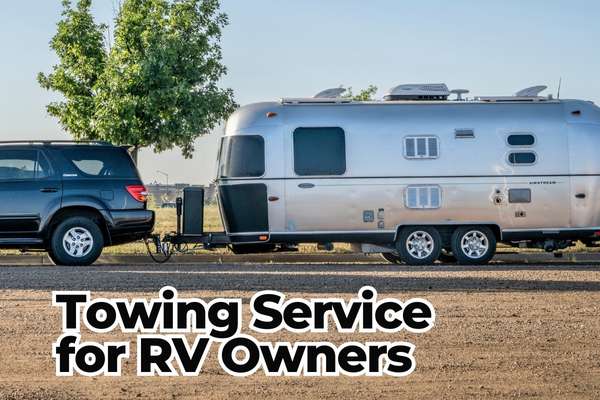
Why You Might Need RV Towing Services
There are several reasons why you might need to have your RV towed:
- Mechanical Breakdown: Engine, transmission, or other mechanical failures can leave your RV inoperable.
Example: While driving cross-country, your engine overheats in a remote area. Despite attempts to fix it, you’re unable to get it started, requiring a towing service to get your RV to the nearest repair shop. - Accidents: Collisions or rollovers may require towing to a repair facility or impound lot.
- Flat Tires: If you’re unable to change a tire on your RV, you may need towing to a service station.
- Electrical Failures: Issues with the electrical system may leave you stranded.
- Misparking or Illegal Parking: Just like regular vehicles, RVs can be towed for parking violations.
Types of RV Towing Services
Towing an RV requires specific equipment, and there are several methods available, depending on the size and condition of the RV. The most common types of towing methods include:
- Flatbed Towing: The safest method for towing an RV, where the vehicle is lifted entirely off the ground. This is ideal for heavily damaged RVs to prevent further harm during transport.
Example:
Imagine you’re on a family road trip in your Class A motorhome. The RV’s transmission fails, leaving it stuck in a remote location. A specialized tow truck with a flatbed lifts the entire RV off the ground, avoiding further damage to the drivetrain or suspension.
- Wheel-Lift Towing: This method involves lifting the RV by its wheels using a hydraulic system. It’s typically used for smaller RVs but might not be suitable for larger or damaged models.
- Dolly Towing: In some cases, a dolly can be used to lift the front wheels of the RV off the ground when the RV’s wheels can’t rotate. If your RV has all-wheel drive, dolly towing is usually required to prevent drivetrain damage.
- Heavy-Duty Towing: This method is required for larger RVs, such as Class A motorhomes, which require stronger lifting equipment.
Challenges of Towing Service for RV Owners
Towing an RV can be more complex than towing a standard vehicle due to the following challenges:
- Size and Weight Considerations:
RVs come in different sizes, and towing an RV requires specialized equipment to handle the load.- Class A RVs weigh between 13,000 and 30,000 pounds.
- Class B and Class C RVs typically weigh between 6,000 and 12,000 pounds.
Standard tow trucks may not be able to handle such heavy vehicles, which is why specialized towing services are essential.
- Limited Accessibility in Remote Areas:
Many RV owners travel to national parks or remote locations, where accessing towing services can be difficult. Not all towing companies have the necessary equipment to reach these areas, which can delay recovery. - Risk of Damage During Towing:
Incorrect towing methods can result in significant damage to the RV, including:- Frame warping due to improper lifting techniques.
- Drivetrain damage if the wrong towing method is used.
- Suspension and tire issues from improper weight distribution during transport.
- Towing Costs:
RV towing is generally more expensive than towing regular vehicles due to the specialized equipment and expertise required. The cost can vary based on:- Distance: Local versus long-distance towing.
- Complexity: Extraction from difficult terrains (e.g., sand, mud).
- Urgency: Emergency towing services tend to be more expensive.
Key Takeaways for RV Towing
- Know Your RV’s Specifications:
Understanding your RV’s weight, height, and towing requirements is critical for selecting the correct towing method and avoiding damage.
Practical tips:
- Keep a note of your RV’s exact weight and height in the glove compartment or your phone for quick reference.
- Plan your routes using RV-friendly GPS apps to avoid low-clearance bridges and weight-restricted roads.
- Before towing, check your owner’s manual for towing recommendations specific to your RV model.
- Towing Method Selection:
Each towing method (flatbed, wheel-lift, etc.) is suited to different circumstances. If you’re unsure, flatbed towing is usually the safest option for most RVs.
Practical tips:
- Ensure the towing company has experience with RV-specific heavy-duty towing if you own a Class A motorhome.
- Plan for Emergencies:
Be prepared for breakdowns by carrying essential items such as a first aid kit, flashlight, and portable charger, especially when traveling in remote areas
Practoca; tips:
- Save the contact information for at least two RV-friendly towing companies in the areas where you plan to travel.
- If traveling to remote areas, carry a satellite communication device in case of limited cell service.
FAQs
- Can any tow truck handle an RV tow?
No. Towing an RV requires a specialized tow truck capable of handling the RV’s weight and size. - What should I do if my RV breaks down in a remote area?
If your RV breaks down in a remote area, stay safe inside the RV and provide precise location details for the tow company to reach you. - Can I tow my RV myself?
Only if you have the proper tow vehicle, hitch system, and experience. It’s generally safer to hire a professional towing service. - Is roadside assistance worth it for RV owners?
Yes, RV-specific roadside assistance can cover towing, tire changes, lockouts, and more, which can save both money and stress in an emergency.
Conclusion
Towing an RV requires careful consideration and the right equipment. By understanding the different towing methods, potential challenges, and how to prepare for emergencies, you can ensure that your RV remains safe and well-cared for in the event of a breakdown. Whether you’re in a remote area or near a service station, knowing what to expect and how to respond can make the process smoother and less stressful.