

When your vehicle breaks down or gets involved in an accident, calling a tow truck may be the first step you take. However, choosing the right type of tow truck can be a bit confusing. Among the various towing options available, the flatbed tow truck is often the preferred choice for specific situations. But how do you know when a flatbed tow is necessary?
This article dives into when flatbed towing is the safest, most effective solution, backed by expert opinions and real-world examples.
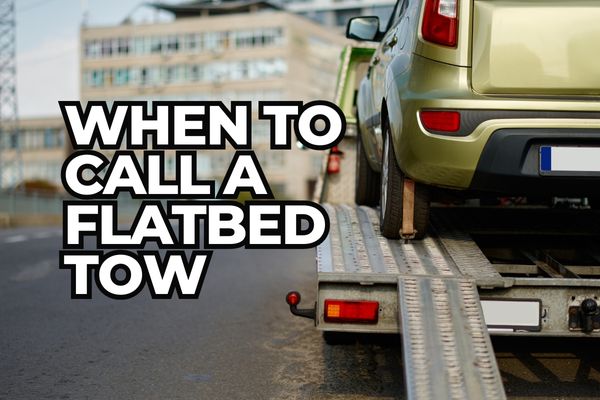
5 Scenarios Where Calling a Flatbed Tow is Applicable
Knowing when to call a flatbed tow truck can be tricky. Below are five key scenarios in which a flatbed tow service is essential.
Vehicles with Low Ground Clearance
Advantage: Prevents damage to the undercarriage
Example: Classic cars and sports vehicles such as Ferraris or Lamborghinis often have low ground clearance. With such vehicles, traditional towing methods like wheel lifts can result in damage to the undercarriage or exhaust system. A flatbed tow allows the vehicle to be safely loaded without scraping the ground or risking damage to sensitive parts.
Real-Life Experience: Sarah M., a car collector from Tucson, shares, “I had my vintage 1965 Mustang towed, and the flatbed was the best choice. I’ve heard horror stories from others who used a wheel lift and had scratches or worse on their vehicle. The flatbed provided peace of mind.”
Motorcycles and Smaller Vehicles
Advantage: Ensures the vehicle is transported securely without risk of tipping
Example: Towing a motorcycle requires more care than a standard car. A flatbed tow truck allows the motorcycle to be loaded onto the truck and secured, eliminating the risk of it tipping over during the journey. The flatbed’s stable surface keeps the vehicle upright, which is crucial for motorcycles with delicate components like the tires and frame.
Quotation: “Flatbed towing is a must for motorcycles. It’s the safest way to transport a bike, especially long distances,” says Jake Thompson, an experienced motorcycle mechanic.
Accident Scenes with Significant Damage
Advantage: Provides safer recovery of heavily damaged vehicles
Example: After an accident, a vehicle may be too damaged to drive. It might have broken axles, flat tires, or bent frames. In these cases, a flatbed tow is ideal because it ensures the vehicle can be loaded onto the tow truck without causing further damage.
Real-Life Experience: After a crash, Michael K., who was involved in a side-impact collision, recounts, “The flatbed tow saved my car. The damage was significant, and using a wheel-lift could have made things worse. The flatbed ensured no further harm was done.”
Long-Distance Towing
Advantage: Reduces wear and tear on the vehicle
Example: If you need to tow your car across a long distance, like from Tucson to Phoenix, a flatbed tow truck is your best option. Using a flatbed ensures that your vehicle is not subjected to the constant movement and wear of dragging its wheels along the road, which is especially important for vehicles that aren’t meant for long-distance towing.
Quotation: David Green, a long-distance towing specialist, notes, “Flatbed towing is ideal for trips that exceed 100 miles. It minimizes wear and tear and ensures the vehicle arrives in the same condition as when it left.”
Electric and Hybrid Vehicles
Advantage: Protects the vehicle’s electric components
Example: Electric vehicles (EVs) and hybrids, such as the Tesla Model 3 or Chevy Volt, have sensitive components like battery packs that can be damaged if towed improperly. Flatbed towing ensures that no power is transferred to the wheels, which could potentially harm the battery or motor systems.
Real-Life Experience: “When I needed my electric vehicle towed, I specifically asked for a flatbed. I wasn’t willing to risk damage to the battery,” says Emily F., an EV owner.
Car Engineer’s Perspective on Flatbed Towing
From an engineer’s standpoint, flatbed towing is often considered the safest and most reliable method for transporting a vehicle. Whether you’re dealing with a high-performance sports car, a classic vehicle, or a delicate electric car, flatbed towing offers multiple advantages that ensure the vehicle’s integrity is preserved throughout the towing process.
Protecting Vehicle Integrity During Transport
As a car engineer, one of the primary concerns is maintaining the integrity of the vehicle’s suspension, drivetrain, and alignment. Towing methods that involve lifting only part of the vehicle, such as wheel-lift towing, can put undue stress on sensitive components, potentially causing damage, particularly if the vehicle is inoperable or if it’s a front-wheel drive or all-wheel drive car.
Flatbed towing solves this issue by lifting the entire vehicle off the ground. The car is secured tightly to the bed, ensuring no part of the vehicle makes contact with the road. This is especially important for vehicles with low clearance or modified suspensions, as traditional towing methods could cause scraping or structural damage.
No Risk to Drivetrain or Tires
Another crucial consideration from an engineering perspective is the drivetrain. For most vehicles, towing them with their wheels on the ground can cause significant damage to the transmission or other drivetrain components, especially if the vehicle is all-wheel-drive or automatic. When the vehicle’s wheels are turning while being towed, the transmission can become damaged as it’s not designed to function while being pulled. With flatbed towing, this risk is entirely eliminated, as the vehicle is off the ground and doesn’t use its drivetrain to move.
Additionally, for vehicles that are inoperable due to a dead battery or mechanical failure, flatbed towing ensures that there’s no unnecessary strain placed on the tires or suspension system during transport.
Safe for Delicate Vehicles and Classic Cars
Flatbed towing is the go-to method for transporting luxury cars, sports cars, or classic vehicles. These cars are often irreplaceable, expensive to repair, and have fragile parts that need careful handling. An engineer would always recommend flatbed towing to ensure that the vehicle’s undercarriage, tires, and suspension are protected from potential damage.
For example, a classic car with original parts is highly sensitive to any form of stress. The metal and components used in such cars may be more brittle than those in newer models, making them prone to cracks or dents if improperly handled. By securing the car on a flatbed, engineers know the vehicle will stay safe and intact throughout the tow.
Ideal for Long-Distance Towing
When it comes to long-distance towing, engineers favor flatbed towing over other methods. A long drive or road trip can lead to excessive wear and tear on a vehicle, especially if it’s not being towed properly. Long-distance trips are hard on any car, and even short-term exposure to rough roads, weather conditions, or mechanical stress can cause serious damage. With flatbed towing, the vehicle is secured and safely off the ground, allowing it to travel without exposing its components to unnecessary risk.
Expert Recommendation: The Most Secure Way to Tow
From a car engineer’s point of view, flatbed towing offers the most secure and damage-free method for transporting a vehicle, especially in fragile or complex situations. Whether you’re dealing with a classic car, an electric vehicle, or a standard car, using a flatbed tow truck guarantees that your vehicle’s suspension, drivetrain, and body will remain in perfect condition.
FAQs
1.Why opt for flatbed towing instead of a wheel-lift tow truck?
Flatbed towing offers better protection for vehicles with low clearance, valuable or delicate cars, and those with existing damage, minimizing the risk of further harm.
2. How much does a flatbed tow cost compared to other towing options?
Flatbed towing can be more expensive than other options like wheel-lift towing due to the equipment and care required, but the added protection for your vehicle justifies the cost in many cases.
3. Can I request a flatbed tow even if my vehicle isn’t damaged?
Yes, many people choose flatbed towing for convenience or to ensure their vehicle remains in pristine condition, especially for long-distance moves or transporting motorcycles.
4. Will my insurance cover flatbed towing?
Most insurance policies cover towing, but it’s always best to check your policy for specifics regarding flatbed towing. Some insurers may have specific guidelines for types of towing services.
5. How long does it take for a flatbed tow truck to arrive?
The arrival time depends on the towing company’s location, traffic conditions, and availability of trucks. Typically, flatbed tow trucks arrive within 30 minutes to an hour in urban areas.
When you’re faced with a breakdown, accident, or need to move a delicate vehicle, knowing when to call a flatbed tow truck is crucial for the safety and protection of your car. Flatbed towing offers numerous benefits, from avoiding undercarriage damage to ensuring safe transport for motorcycles and electric vehicles. By understanding the scenarios where flatbed towing is most applicable, you can make an informed decision and ensure your vehicle is handled with care.