

When you think about road congestion or traffic incidents, towing may not immediately come to mind as a key factor in alleviating the issue. However, towing plays a significant role in traffic flow, helping to clear blocked lanes, remove disabled vehicles, and assist in accident recovery. In busy urban areas, where roadways are packed with daily commuters and heavy traffic, effective towing services are crucial for maintaining smooth traffic movement and road safety.
Removing disabled vehicles from busy roads isn’t just about convenience; it’s about safety. Preventing more crashes and easing traffic jams are two important ways towing services improve our roads. Better traffic flow is a direct result. While often unnoticed, their role is critical to success. Think of the unsung heroes.
The Science Behind Traffic Flow and Towing
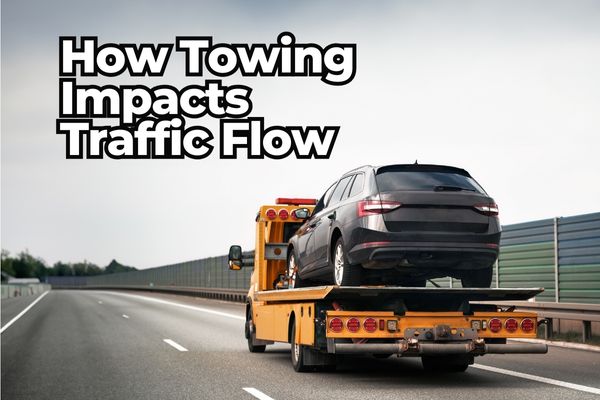
Traffic flow isn’t just about moving cars—it’s about maintaining a constant, efficient rhythm. When one vehicle is removed from the flow due to mechanical failure, accidents, or illegal parking, towing services become an immediate solution to prevent traffic from stalling.
Towing Reduces Congestion
When vehicles are removed swiftly, lanes are freed, and the flow of traffic resumes its normal pace. For instance, in busy metropolitan areas, the efficiency of towing services helps keep drivers moving. In cases of heavy accidents, where cars are blocking multiple lanes, tow trucks can clear the wreckage, which significantly reduces the likelihood of a full-blown traffic jam.
The Ripple Effect of Quick Towing
The speed and efficiency of towing don’t just benefit the immediate area where the vehicle is being removed—they also have a positive ripple effect throughout the road network. By clearing an obstruction quickly, tow trucks prevent the creation of traffic jams that can affect surrounding roads and highways. For example, when a tow truck clears a lane on a busy freeway, it allows other drivers to continue at a reasonable speed, preventing the build-up of a bottleneck that could spill over into surrounding streets.
In many cases, rapid towing operations help maintain flow throughout the entire traffic system, allowing the road network to continue functioning smoothly. By avoiding a traffic jam, the chances of secondary accidents—those caused by frustrated drivers or poor visibility—are also reduced.
According to one local towing operator, George Hayes, “In our line of work, every second counts. We are trained to arrive at the scene quickly, assess the situation, and clear the road as safely and efficiently as possible. Our goal is always to minimize any impact on surrounding traffic.”
Speed, safety, and efficiency: that’s the key to keeping traffic flowing freely, even during rush hour.
The Chain Reaction Effect of Delayed Towing
If towing is delayed, the backup caused by a single stalled vehicle can ripple through the entire road network. For example, a single car stalled on a bridge or highway could lead to delays for hundreds of drivers. Tow trucks are strategically placed to prevent such delays by providing fast removal.
Speed and Efficiency: Key Factors in Traffic Flow
In busy cities, where traffic congestion can quickly spiral out of control, the efficiency of towing services is paramount. Towing companies ensure that they have well-trained drivers and dispatch systems that can handle emergency situations promptly.
Technology’s Role in Speed and Efficiency
Advances in towing technology have significantly improved both speed and efficiency. Coordination between tow trucks and other emergency services is a breeze thanks to the sophisticated communication systems in today’s tow trucks. They can easily connect with traffic control centers and law enforcement. Real-time alerts speed up the process. Tow operators are notified immediately about accidents and breakdowns, getting to the scene quicker.
For example, real-time traffic monitoring systems now inform tow dispatchers about current traffic conditions, helping them choose the fastest and safest route to a location. Some cities are even integrating smart towing systems, where sensors embedded in roadways notify towing companies directly about obstructions in real-time, allowing them to dispatch trucks almost instantly.
In addition, automated vehicle tracking systems help ensure that tow trucks don’t get delayed by traffic congestion on their way to a scene. They can easily adjust their routes based on up-to-the-minute traffic data. This level of coordination further enhances the overall efficiency of towing operations.
Perspectives from Drivers and Experts
From Drivers on the Road: A Personal Perspective
Many drivers may not realize the extent to which towing can influence their commute until they are directly affected. One local driver, Maria Rodriguez, shared her experience:
“I was stuck in traffic for almost 45 minutes once because of a broken-down truck blocking one lane. It was frustrating, but as soon as the tow truck arrived, the situation cleared up in under 10 minutes. That was a real relief!”
Because the tow truck got there so fast, the issue was resolved quickly. This prevented a big slowdown for many other drivers. Traffic jams? Maria’s experience shows us how crucial towing is to solving them. Quick towing means less congestion and better commutes for everyone.
From Road Safety Experts: A Professional Perspective
The quicker a wrecked car is cleared, the lower the chance of more accidents. Road safety really depends on towing services. That’s what traffic expert Dr. Kevin McAllister says. A quick response to a roadway incident—like a car crash or abandoned vehicle—means fewer accidents, better sightlines for drivers, and less congestion. Nothing here. It’s empty.
Preventing more accidents, especially on high-speed roads, is a benefit of well-managed towing. Road debris is a major cause of accidents, and towing helps clear it away.
FAQs
1. How does towing improve traffic flow?
Towing plays a crucial role in clearing obstructions from the roadway quickly. By removing broken-down vehicles, accident debris, or illegally parked cars, towing services help restore lanes and reduce congestion. This allows for smoother traffic movement and less risk of accidents caused by stalled vehicles.
2. How long does it usually take for a tow truck to clear an accident scene?
The time it takes to clear an accident scene depends on the severity of the incident. For minor accidents or vehicles blocking a single lane, tow trucks can typically clear the area within 15-30 minutes. For more complicated accidents, such as those involving multiple vehicles or large debris, it may take longer, but tow companies prioritize quick response times to minimize traffic delays.
3. Can towing services reduce the risk of secondary accidents?
Yes, towing services play a critical role in reducing the risk of secondary accidents. By quickly removing vehicles and debris from the road, tow trucks help to restore normal traffic flow, which prevents other drivers from becoming involved in further collisions caused by the obstruction.
4. How does the speed of towing impact road safety?
The faster a vehicle is removed from the road, the quicker traffic can return to normal, reducing the likelihood of accidents. Towing services that operate efficiently help maintain safe driving conditions by preventing traffic from backing up and improving visibility for other drivers. Quick towing also reduces the chances of driver frustration, which can lead to reckless driving.
5. Are towing services available 24/7 for traffic-related incidents?
Yes, many towing companies offer 24/7 emergency services to handle accidents, breakdowns, and other incidents that can obstruct traffic. No matter the time of day or night, they are equipped to assist in clearing vehicles and restoring traffic flow as quickly as possible.
Conclusion
Keeping traffic flowing smoothly and roads safe depends on towing, even if drivers don’t always see it that way. Accidents, stalled cars, and illegal parking—these are all situations where towing services step in. Their work keeps traffic moving smoothly and efficiently. Think about all the times you’ve been stuck in traffic. Tow trucks quietly work behind the scenes to keep those jams from getting worse. They are unsung heroes, preventing major disruptions and improving daily commutes.