

When you’re out on the road and an unfortunate breakdown happens, the first thing you rely on is a reliable tow truck. But have you ever wondered what makes a tow truck truly ready for any situation? Beyond the truck itself, it’s the collection of specialized tools and equipment that tow truck operators rely on to safely and efficiently handle vehicles. Whether you’re a professional tow truck driver or someone looking to understand the must-have gear for safe towing, this article breaks down the critical tools every tow truck should be equipped with.
Guidelines of Towing Associations
Towing associations and regulatory bodies, such as the Towing and Recovery Association of America (TRAA), provide guidelines on the equipment tow trucks must carry to be compliant with safety standards. These guidelines aim to ensure that operators can handle vehicles of all sizes and types while minimizing risks to themselves and others on the road.
Tools Every Tow Truck Should Have
A well-equipped tow truck is vital for delivering safe, efficient, and effective towing services. Below are the essential tools that ensure a tow truck can handle a wide range of situations. Here’s a detailed list of the essential tools every tow truck should carry:
1. Winches and Recovery Straps
Purpose:
Winches are essential for pulling vehicles out of difficult or stranded positions, like ditches, mud, snow, or steep terrain. A winch is usually mounted on the front of a tow truck, allowing the operator to reel in a steel cable attached to the vehicle for recovery.
Example:
- Electric Winches: These are often preferred as they offer ease of operation and high pulling power.
- Recovery Straps: These heavy-duty nylon or polyester straps are used in conjunction with the winch to help secure a vehicle during recovery.
Why It’s Necessary:
A powerful winch allows tow truck operators to pull vehicles without risking damage to the towed vehicle or the truck itself. It’s especially crucial in off-road recovery or when dealing with vehicles stuck in hazardous conditions.
2. Tire Chains and Cables
Purpose:
Tire chains are used in winter or slippery road conditions to increase traction for the tow truck, preventing it from getting stuck when towing on snow or ice-covered roads.
Example:
- Heavy-duty Snow Chains: These chains wrap around the tires of both the tow truck and the towed vehicle to ensure better traction and stability.
Why It’s Necessary:
In regions with harsh winters or during unpredictable weather, tire chains are vital for both safety and the success of towing operations in difficult conditions.
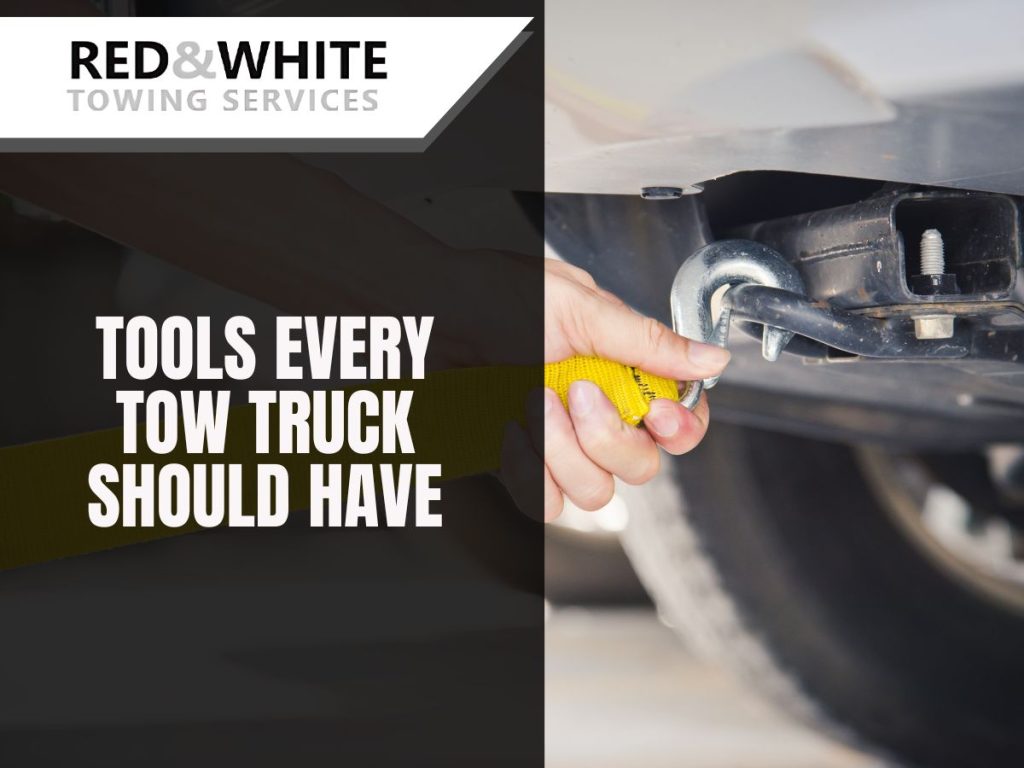
3. Tow Straps, Tow Cables, and Tie-Downs
Purpose:
Tow straps and cables are used to secure the vehicle to the tow truck. They come in varying lengths and strengths depending on the type of vehicle being towed. Tie-downs or ratchet straps are used to prevent movement of the towed vehicle, ensuring it remains secure on the tow truck.
Example:
- Tow Cables (Steel or Synthetic): These cables are used for heavy-duty towing or to secure a vehicle during long-distance towing.
- Ratchet Straps and Tie-Downs: These are typically used with flatbed tow trucks to secure vehicles to the bed during transport.
Why It’s Necessary:
Without reliable tow straps and cables, there’s a high risk of the vehicle shifting, falling off, or causing damage to both the vehicle and the tow truck. Secure tie-downs are also a requirement for compliance with safety regulations.
4. Tow Lights and Marker Lights
Purpose:
Tow lights are essential for improving visibility when towing a vehicle, especially in low-light or nighttime conditions. These lights are usually mounted on the towed vehicle and connected to the tow truck’s electrical system.
Example:
- LED Tow Lights: These lights are energy-efficient, bright, and durable, making them ideal for all towing conditions.
Why It’s Necessary:
Tow lights are required by law in many regions and are critical for ensuring that the towed vehicle is visible to other drivers, reducing the risk of accidents.
5. Hydraulic Lifts and Jacks
Purpose:
Hydraulic lifts and jacks are used to lift vehicles off the ground, whether for loading onto a flatbed or assisting in recovery. They allow for the smooth lifting of vehicles without causing damage.
Example:
- Hydraulic Jacks: A heavy-duty hydraulic jack is needed for lifting vehicles that are low to the ground or need to be raised for loading.
Why It’s Necessary:
These tools provide the mechanical advantage needed to safely and efficiently lift and load vehicles onto a tow truck, especially when dealing with vehicles that are damaged or have a low clearance.
6. Dolly Wheels
Purpose:
Dollies are small wheeled devices used to lift a vehicle’s wheels off the ground, allowing for safe towing of cars that are either immobile or have wheels that cannot rotate. They are especially useful for all-wheel-drive or four-wheel-drive vehicles.
Example:
- Wheel Dollies: These allow the operator to lift the wheels of the vehicle and safely tow it, either manually or with the help of the truck.
Why It’s Necessary:
Dollies are essential for towing vehicles that have specific drivetrain configurations or vehicles with damaged wheels or axles.
7. Jumper Cables
Purpose:
Jumper cables are used to jump-start vehicles with dead batteries, allowing the driver to get the car running without needing to tow it to a repair shop.
Example:
- Heavy-duty Jumper Cables: These cables are designed for use with large vehicles, providing enough power to jump-start heavy-duty trucks and other vehicles.
Why It’s Necessary:
Dead batteries are one of the most common issues tow truck drivers encounter. Having a reliable set of jumper cables on hand can help resolve this issue quickly and avoid unnecessary tows.
8. Fire Extinguisher
Purpose:
A fire extinguisher is a basic but vital safety tool that must be carried on every tow truck. It’s used to put out fires that may occur during an accident, electrical malfunction, or engine failure.
Example:
- Class ABC Fire Extinguisher: This is the standard fire extinguisher type, effective for most types of fires, including electrical, fuel, and grease fires.
Why It’s Necessary:
Towing involves a lot of electrical equipment and moving vehicles, which can sometimes result in fires. Having a fire extinguisher on hand is not only a safety measure but often a legal requirement.
9. Winching Kits and Recovery Accessories
Purpose:
Winching kits include all necessary accessories, such as shackles, snatch blocks, and recovery straps, which work together to make the winching process more efficient and safe.
Example:
- Shackles and Snatch Blocks: Shackles are used to secure cables or ropes, while snatch blocks help redirect the cable for better leverage during recovery.
Why It’s Necessary:
A comprehensive winching kit enhances the versatility and safety of the recovery process, especially when dealing with difficult or challenging recoveries.
10. Hydraulic Towing Equipment (for Heavy-Duty Vehicles)
Purpose:
Hydraulic equipment like heavy-duty lift gates and boom lifts is used for towing commercial trucks, RVs, and other large vehicles.
Example:
- Boom Lift: Used to lift heavy-duty vehicles or vehicles that are involved in accidents or are in tough-to-reach places.
Why It’s Necessary:
For large vehicles or vehicles in precarious positions, hydraulic towing equipment is critical to ensuring that the job is done safely and without damaging the vehicle or the tow truck.
11. First Aid Kit
Purpose:
A well-stocked first aid kit is an essential tool in any tow truck to handle minor injuries and accidents until help arrives.
Example:
- Comprehensive First Aid Kit: Includes bandages, antiseptics, splints, and other emergency supplies.
Why It’s Necessary:
Tow truck operators often work in potentially hazardous conditions, and having a first aid kit ensures that they can provide immediate care in case of accidents or injuries.
12. Tool Kit (General Maintenance Tools)
Purpose:
A standard tool kit should be available for general maintenance and quick repairs. Tow trucks should be equipped with tools like wrenches, screwdrivers, pliers, and socket sets to handle small mechanical issues that may arise during the operation.
Example:
- Mechanic’s Tool Kit: Includes tools like hammers, screwdrivers, and pliers for making quick fixes to the tow truck or the towed vehicle.
Why It’s Necessary:
Basic mechanical issues may arise, and being able to handle them on-site can prevent delays and ensure the tow truck is always in working condition.
13. Chains and Hook Assemblies
Purpose:
Chains and hooks are used for securing vehicles that may not have the necessary tow points or are too large to be handled by standard straps or cables.
Example:
- Heavy-duty Chains: These are used for securing large vehicles that may not have standard tie-down points or for additional security when towing larger vehicles.
Why It’s Necessary:
Chains and hooks offer additional security and are crucial for towing large or irregularly shaped vehicles.
14. Towing Safety Cones and Flares
Purpose:
Safety cones and flares help mark the towing area, providing visibility and warning to other drivers of the towing operation.
Example:
- Reflective Safety Cones and LED Flares: These tools help create a safe zone around the tow truck and towed vehicle, ensuring drivers slow down and stay alert.
Why It’s Necessary:
For safety, visibility is key—especially when working in traffic. Cones and flares are essential for ensuring the safety of the driver, the towed vehicle, and other road users.
By keeping the right tools on hand, tow truck drivers ensure they are ready to handle any emergency situation, maintain the integrity of the towed vehicle, and most importantly, ensure everyone’s safety.
FAQs
1. What is the most important tool for a tow truck?
The winch is considered one of the most important tools for a tow truck because it allows the operator to pull vehicles out of difficult situations, such as ditches or mud.
2. Why should tow trucks carry tire chains?
Tire chains are essential for towing in icy or snowy conditions. They help increase traction, reducing the risk of the tow truck or towed vehicle getting stuck.
3. What are the best types of tow lights to use?
LED tow lights are the best choice because they provide high visibility and durability, especially in low-light conditions.
4. How often should a tow truck’s equipment be checked?
Tow truck equipment should be checked daily before going out on calls to ensure everything is in working order, from the winch to safety lights and towing straps.
5. Can a tow truck carry any type of vehicle?
While most tow trucks can carry standard vehicles, specialized tow trucks like flatbeds are needed for delicate vehicles such as luxury cars, motorcycles, or classic cars.
Conclusion
Equipping a tow truck with the right tools is not just a matter of convenience—it’s about safety, efficiency, and compliance with industry standards. From winches to fire extinguishers, each tool plays an integral part in ensuring successful towing operations. Being prepared for any situation reduces risks, helps avoid delays, and ensures that both the operator and the towed vehicle remain safe on the road.
Explore Related Articles:
- Towing Service in Bad Weather
- Preparing Your Car for Towing
- How to Avoid Towing Scams